Services
We Build MCP Connectors for ChatGPT and Claude
Twelve live on our own products. Yours could be the thirteenth.
An MCP server is the piece that lets ChatGPT or Claude talk to your software directly. Your customers connect their account once, then ask in plain English: "who hasn't paid yet", "book the cage for Thursday at six", "drop the price on the Switch games by ten percent". The assistant calls your system, shows the answer, and asks before it changes anything. We have built twelve of these on our own products, all on one tested stack. When we quote yours, we are quoting work we have already done.
What an MCP connector actually is
MCP (Model Context Protocol) is the open standard ChatGPT, Claude and a growing list of other assistants use to plug into outside software. A connector is a small server that sits next to your app and describes a set of tools: "list this week's bookings", "add a player", "publish the schedule". The assistant decides when to call them, and your server decides what each user is allowed to see and do.
For a business that means your product shows up where your customers already spend their day. A league convenor can build next season's schedule by talking to ChatGPT. A shop owner can reprice stock from Claude on their phone. Nobody has to learn another dashboard.
How a build goes
We start with the questions your users actually ask and turn each one into a tool. Read-only tools ship first, because they are safe and they show quickly whether the connector is useful. Then the tools that change things, each with a preview step: the assistant shows what it is about to do and waits for a yes. Anything that overwrites or deletes is marked as destructive, so ChatGPT and Claude both treat it with care.
Sign-in is OAuth with a consent page on your own domain, so users connect their own account and only ever see their own data. Every tool is scoped to the tenant: a league, a store or an organization can never read another one's records. Then we write the review package (test accounts, positive and negative test cases, listing copy, icons) and submit it to OpenAI's app directory and Claude's connector directory.
The parts most quotes leave out
A demo connector takes an afternoon. A connector that passes review and behaves for real users takes the rest. Review teams check tool annotations, test with the accounts you give them, and reject for things like a write tool that is not marked as one, or a consent page that drops its cookies on a cross-site redirect. We have hit those, fixed them, and built the fixes into the stack.
There is also the ongoing part. Assistants change how they call tools, and your app changes underneath the connector. We keep a test suite that runs every tool against a demo account, so a change to your app that would break the connector gets caught before your users find it.
Connectors we have shipped
Each one runs on a product we own and operate, built on the same OAuth and tool stack. Several have been submitted to ChatGPT's app directory under our developer name, Blacktie Collaborative.
- Slo-Pitch Central: League schedules, standings, registrations and score entry, with a schedule builder that previews before it publishes
- Simple Standings: 32 tools covering leagues, teams, games and standings pages
- Golf League Software: 18 tools: league nights, scorecards, handicaps and flights
- TryoutSheet: 16 tools for running tryouts and evaluations
- Game Store Software: 14 tools: inventory, search and price changes with a confirm step
- Score That Play: 13 tools for live scorekeeping
- LiveDraft-It: 12 tools to set up and run a live draft
- Tax Calculator Canada: 11 calculators, open to anyone with no sign-in
- Price Tracker Canada: 8 tools for watching prices and alerts
- DugoutHQ: 7 tools for rosters and team schedules, scoped to each league and team
- Sports Booking Management: Facility bookings and availability
- The Den Baseball Centre: A private owner connector: pencil in bookings, send the deposit invoice, check who has paid, all from a phone
What you get
- A custom MCP server for ChatGPT, Claude and other MCP clients
- OAuth sign-in and a consent page on your domain
- Read tools first, then write tools with a preview and a confirm step
- Every tool scoped so users only see their own data
- The review package for OpenAI's and Claude's directories, written and submitted
- A test suite that runs every tool against a demo account
Our Work in MCP Development
Projects where we did this. Every one is ours to point at — built, shipped, and in most cases still run by us.
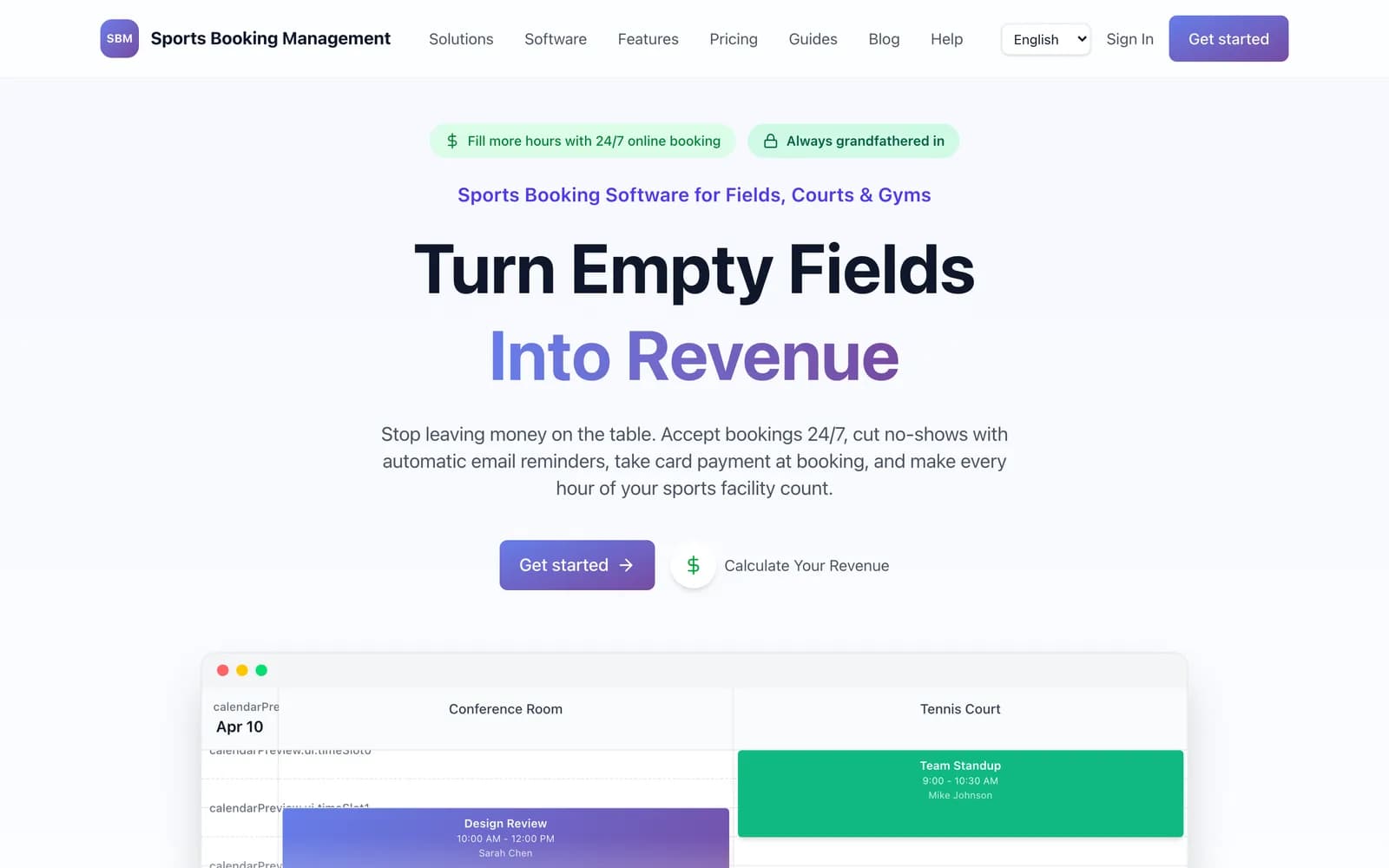
Facility Booking SaaS
Sports Booking Management
Field and court scheduling software that lets sports facilities take bookings 24/7, manage multiple venues, and stop running their calendar over the phone.
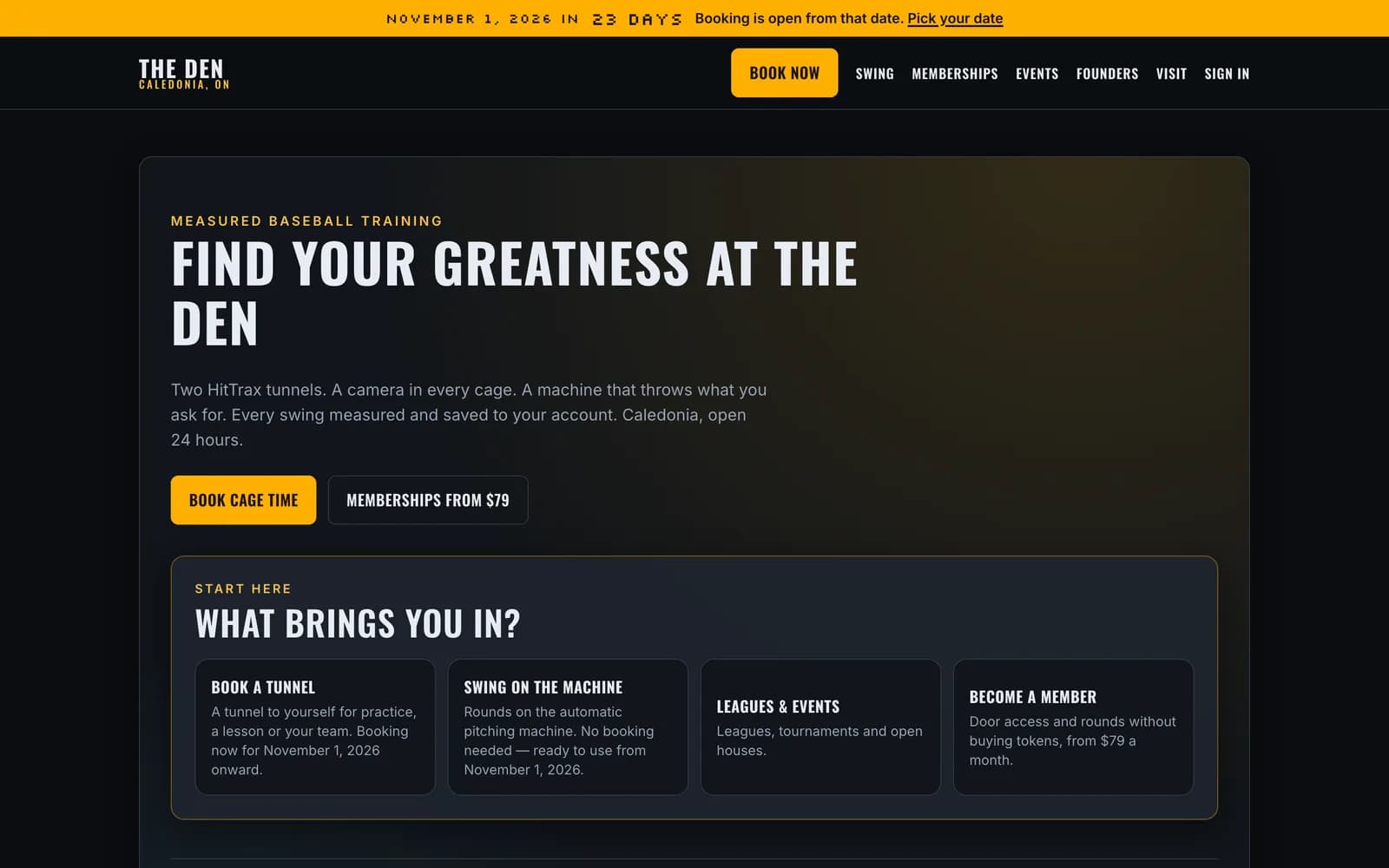
Sports Facility — Caledonia, ON
The Den Baseball Centre
A pre-launch site for Caledonia’s year-round indoor baseball facility — three HitTrax-equipped tunnels, 24/7 member access, and a waiting list built to fill day one.
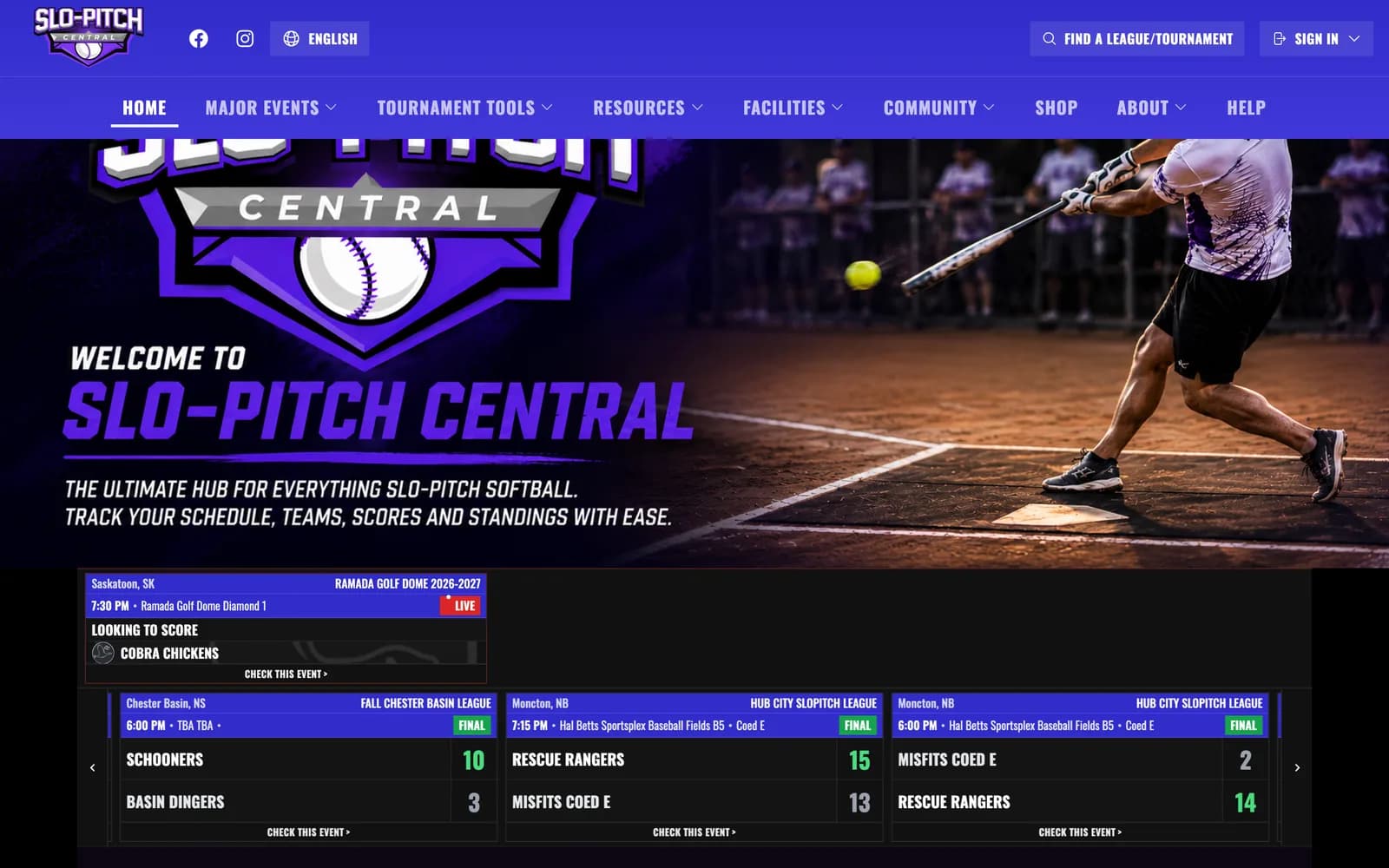
League Management Platform
Slo-Pitch Central
All-in-one league and tournament management for the slo-pitch community — plus free planning tools, calculators, and a directory of 8,400+ diamonds at 4,800+ ballparks across Canada.
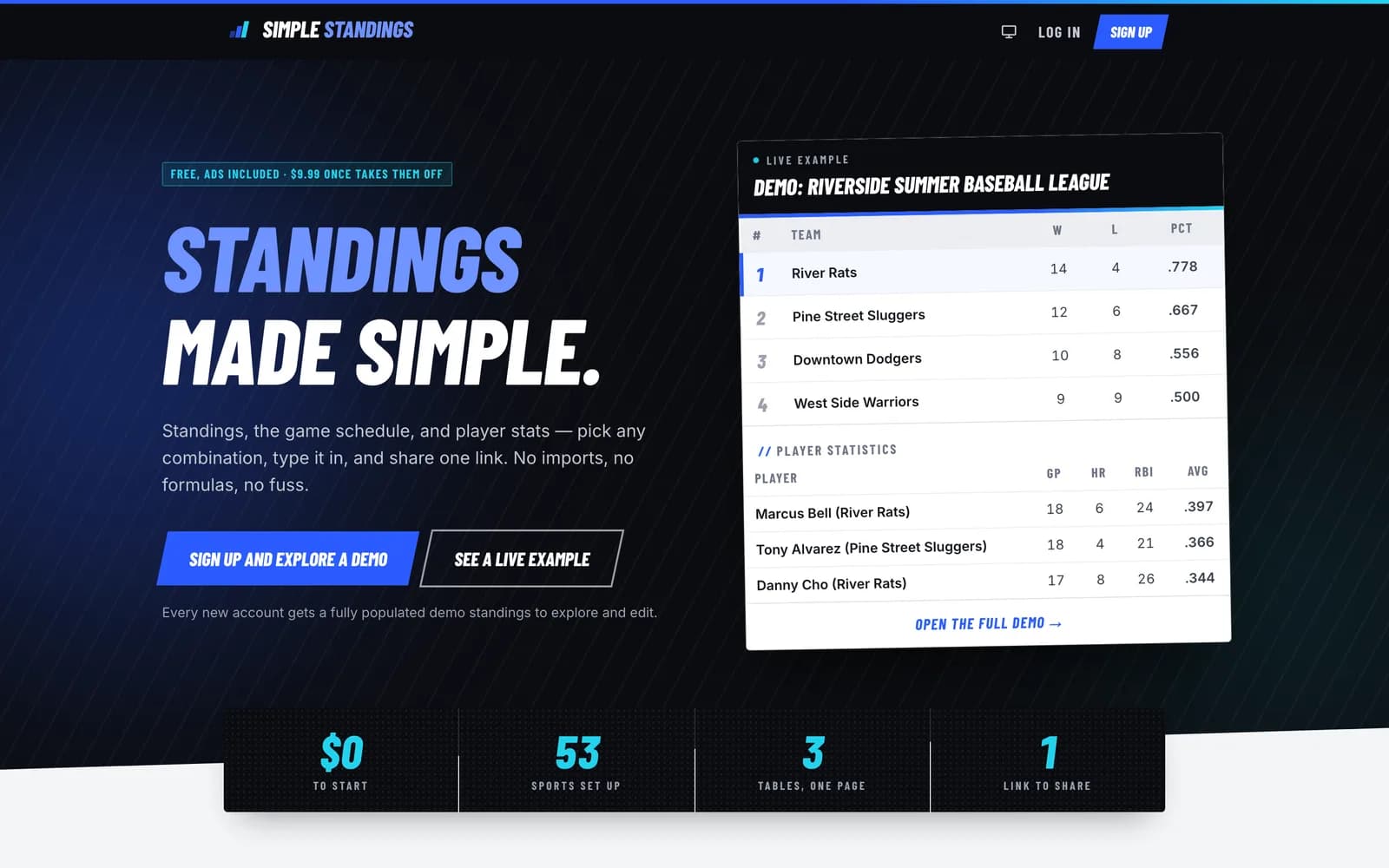
League Standings Tool
Simple Standings
Standings, schedules, and player stats for rec leagues — type in your teams and scores, share a link. No imports, no formulas, no login for viewers.
Tell us what you need
Three quick questions and we'll come back within one business day with a clear next step and a fixed price. If it turns out we are not the best people for it, we will point you at who is.
Your move
Tell us what you run. We'll show you the play.
A written plan and a fixed price, back within one business day. No retainers you did not ask for.
FAQ
MCP Server Development — Common Questions
How much does a custom MCP server cost?
A focused connector with read tools and a few confirmed write tools typically runs $4,000 to $12,000 CAD (roughly US$3,000 to US$9,000). Connectors with several user roles, many write tools or a complex permissions model run $12,000 to $30,000 CAD. That includes OAuth, the consent page, tests and the directory submissions. We quote a fixed price after a scoping call.
How long does it take?
Two to four weeks for most connectors, including review prep. Directory review itself is out of our hands and has been taking one to three weeks.
Will it be listed in ChatGPT's app directory?
We prepare and submit the listing, and we know what reviewers check because we have been through it. Approval is OpenAI's decision, so nobody can promise it. A connector works without a listing too: users can add it by URL in ChatGPT and Claude.
Does it work with Claude as well as ChatGPT?
Yes. MCP is an open standard, so one server works with ChatGPT, Claude and other MCP clients. We test against both.
Is it safe to let an AI change data in our system?
It changes only what your server allows, for the user who signed in. Every write tool previews the change and waits for the user to confirm. Destructive tools are marked as destructive, and the server enforces permissions itself rather than trusting the assistant to behave.
Do you work with businesses outside Canada?
Yes. MCP builds are remote work, and we take projects across Canada and the US. We invoice in CAD or USD.